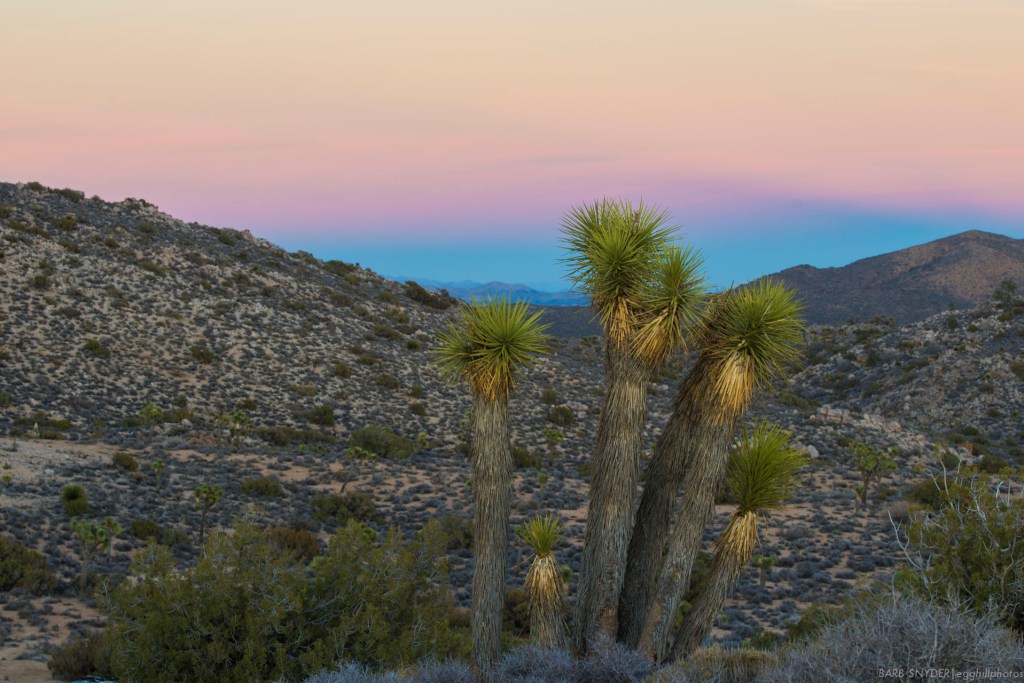
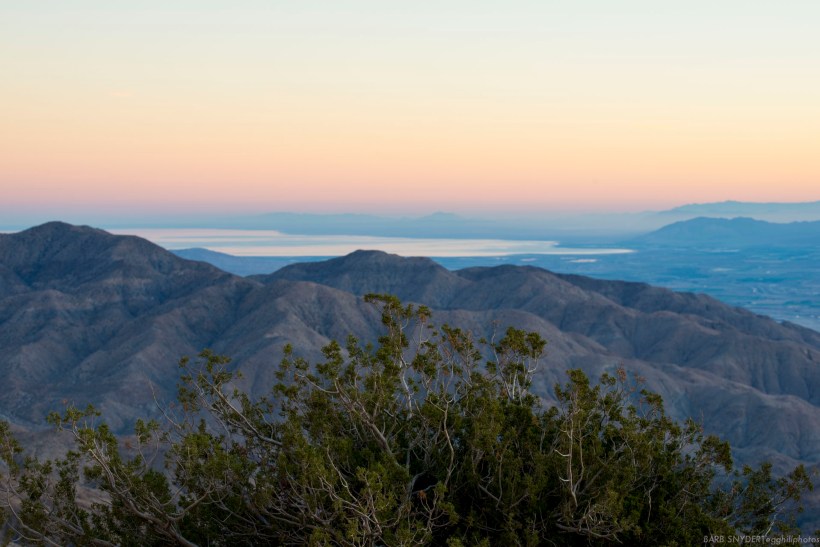
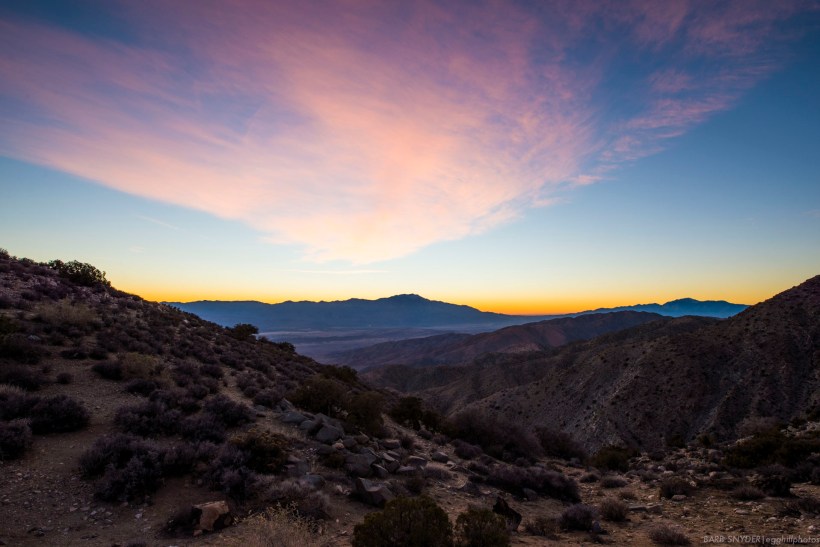
Joshua Tree National Park encompasses about 800,000 acres (slightly larger than Yosemite National Park at 742,000 acres) with two distinct desert regions. The Mojave Desert is in the northern part of the park, complete with Joshua Trees and the Colorado Desert in the southern part of the park, has lots of cacti and, like parts of the Great Basin (Death Valley) to the north, some of the area is below sea level. The Salton Sea that borders the park is seen from Keys Vista within the park. You may click on any of the above links (they open in a new window) to find more information about the area. The area is desert plants, desert animals, surrounded by windmills, solar farms, a Marine Corps Air Ground Combat Center and vast stretches of Bureau of Land Management (BLM) lands where RV’ers take their rigs or ‘toy boxes’ filled with motor cycles, four wheelers, jeeps and dune buggies to play during the winter’s mild temperatures.
Day One of the trip began before sunrise in the Sierras (a time of day I’m not always up for). When I sat down to start pulling photos for the trip, I quickly realized there were too many for one post. Stay tuned for Day Two! There are a few photos of the five-hour road trip.


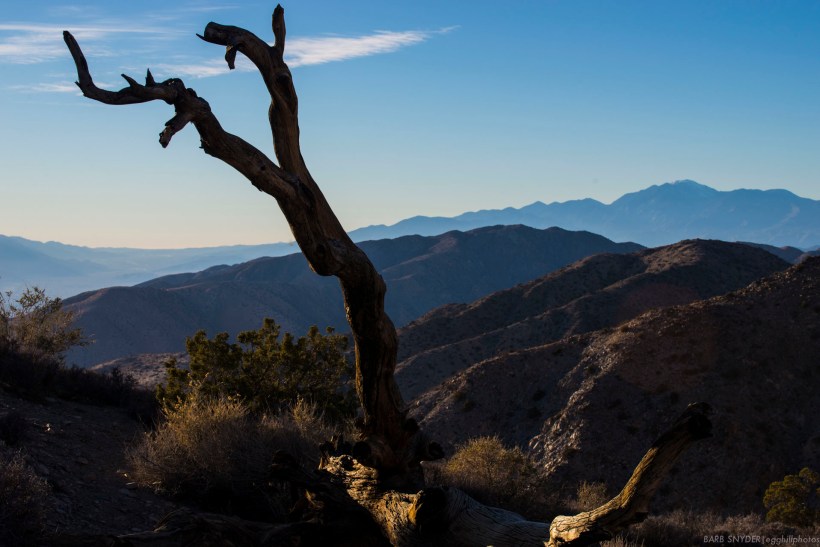
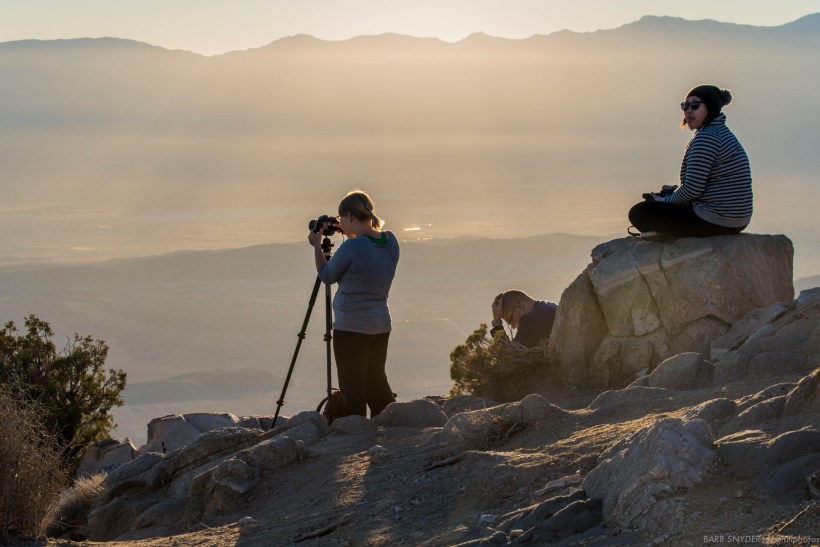
My photographer friends from SoCal were not arriving until the next day, so I cruised through the park for a few hours in the afternoon on Day One. I barely scratched the surface of the park though. I will have to go back again – love the National Parks Pass!




 from egghill
Leave a reply to erepole Cancel reply