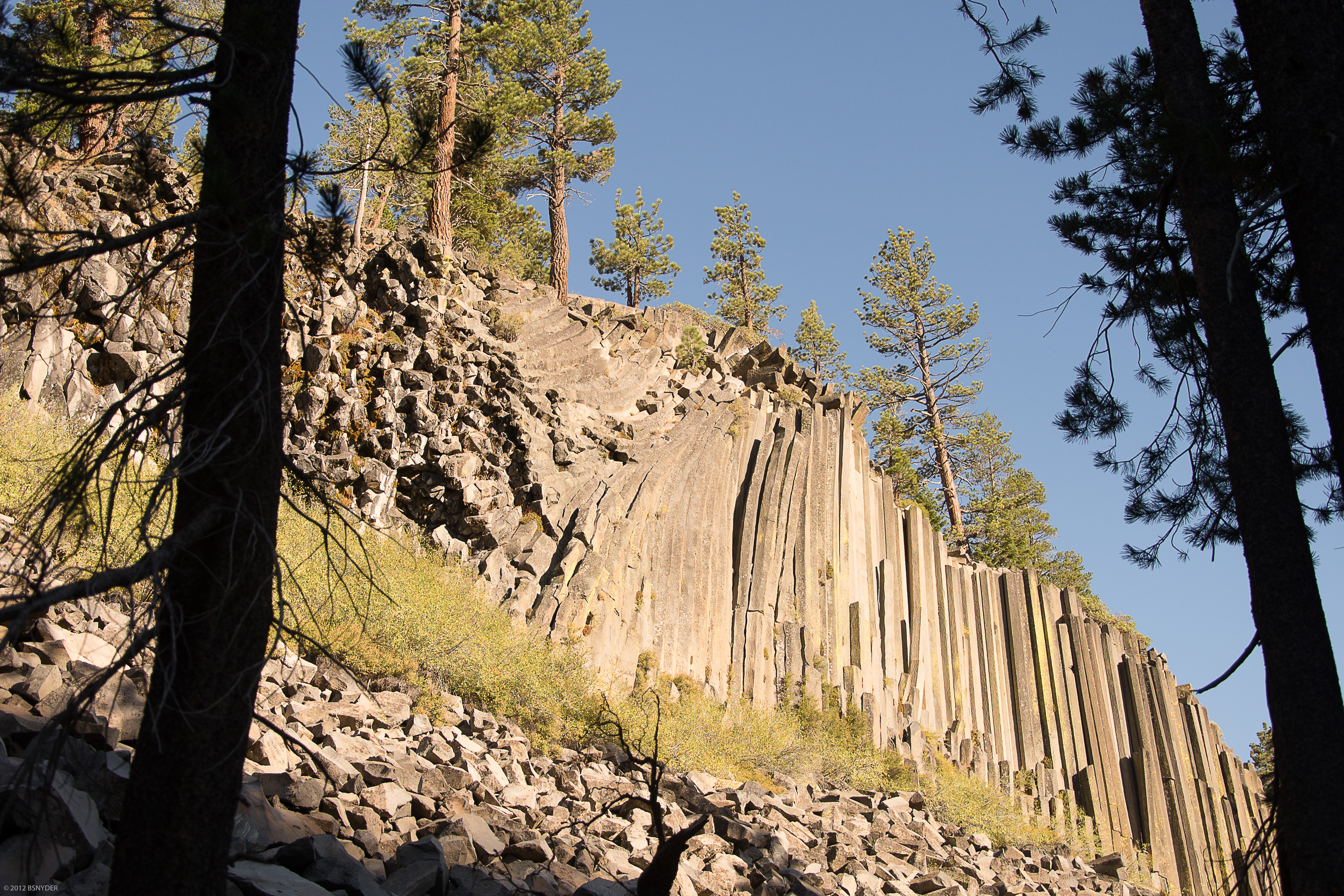
Devil’s Postpile located near Mammoth Mountain and Yosemite in California, refers to columnar basalt formed when lava flowed down the San Joaquin river valley 100,000 years ago and piled up thickly, causing slow cooling of the lava and consequently the columns of ‘post’ were formed. Like beehives and bubbles, they form geometric shapes that are wondrous to see. You can read more about it in Wikipedia: Devil’s Postpile
Throughout August and September most of the Mammoth area had been affected by smoke from different fires (Aspen Fire, Bodie Fire, King’s Canyon Fire). Yosemite’s Rim Fire (now 80% contained, 255,560 acres) which blew smoke mostly northwest, was probably the closest fire, but didn’t affect Mammoth. On the day I visited Mammoth last week, the skies were beautifully clear and it was a blustery day and when I say blustery, it was probably blowing 35 mph gusts.
I hiked first to Rainbow Falls which is a 101′ foot drop of the San Joaquin River (this would be called a creek back east ;-)).


The area surrounding Rainbow Falls was part of the Rainbow Fire in 1992. Some massive Jeffrey Pines stumps are still standing, but many of the stumps were felled by 100 mph winds in November of 2011. I wondered as I looked out over the now open area, if this fire contributed to the gigantic windfall that happened in Mammoth where over 10,000 trees were lost, since it is now open meadow instead of being heavily wooded.
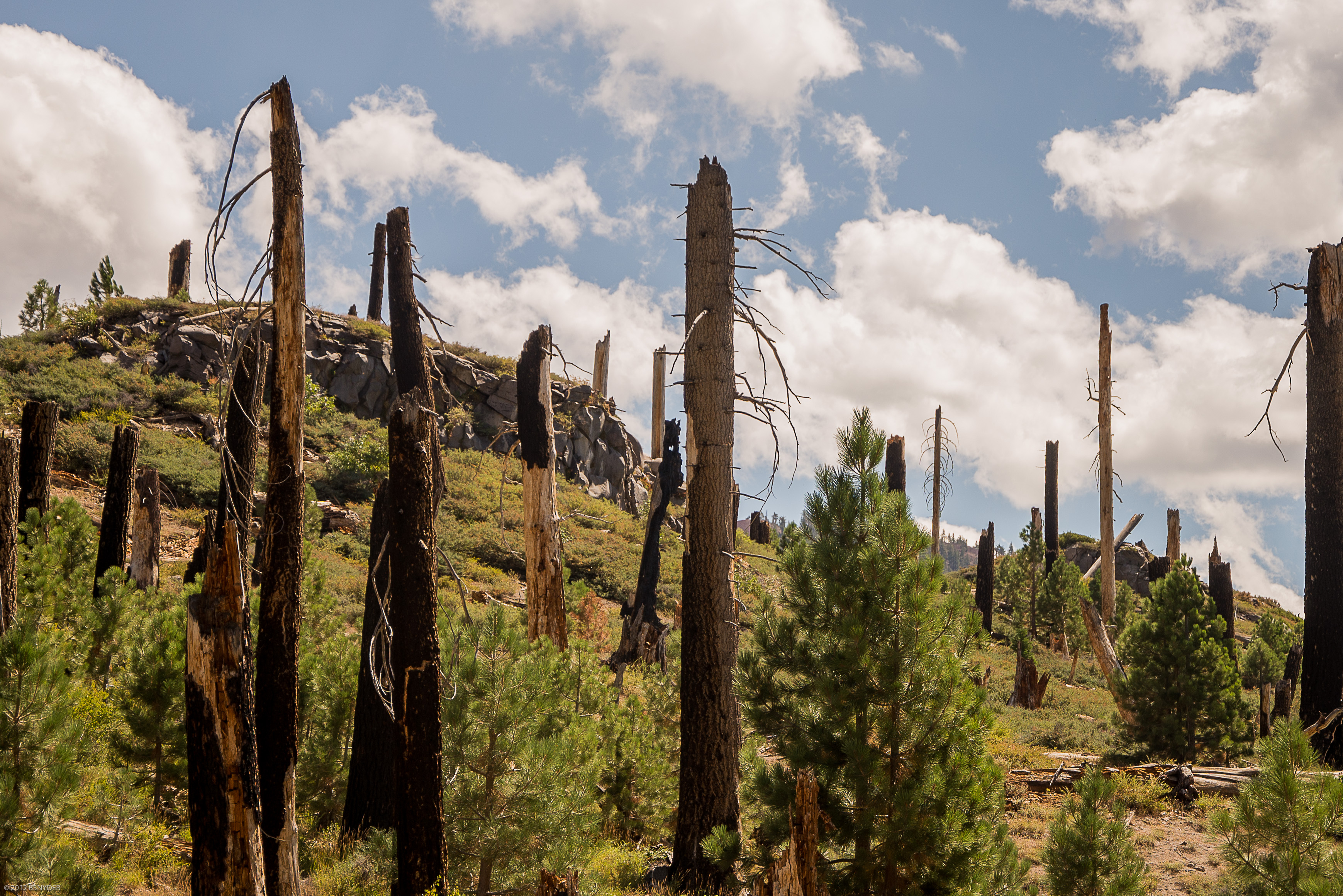

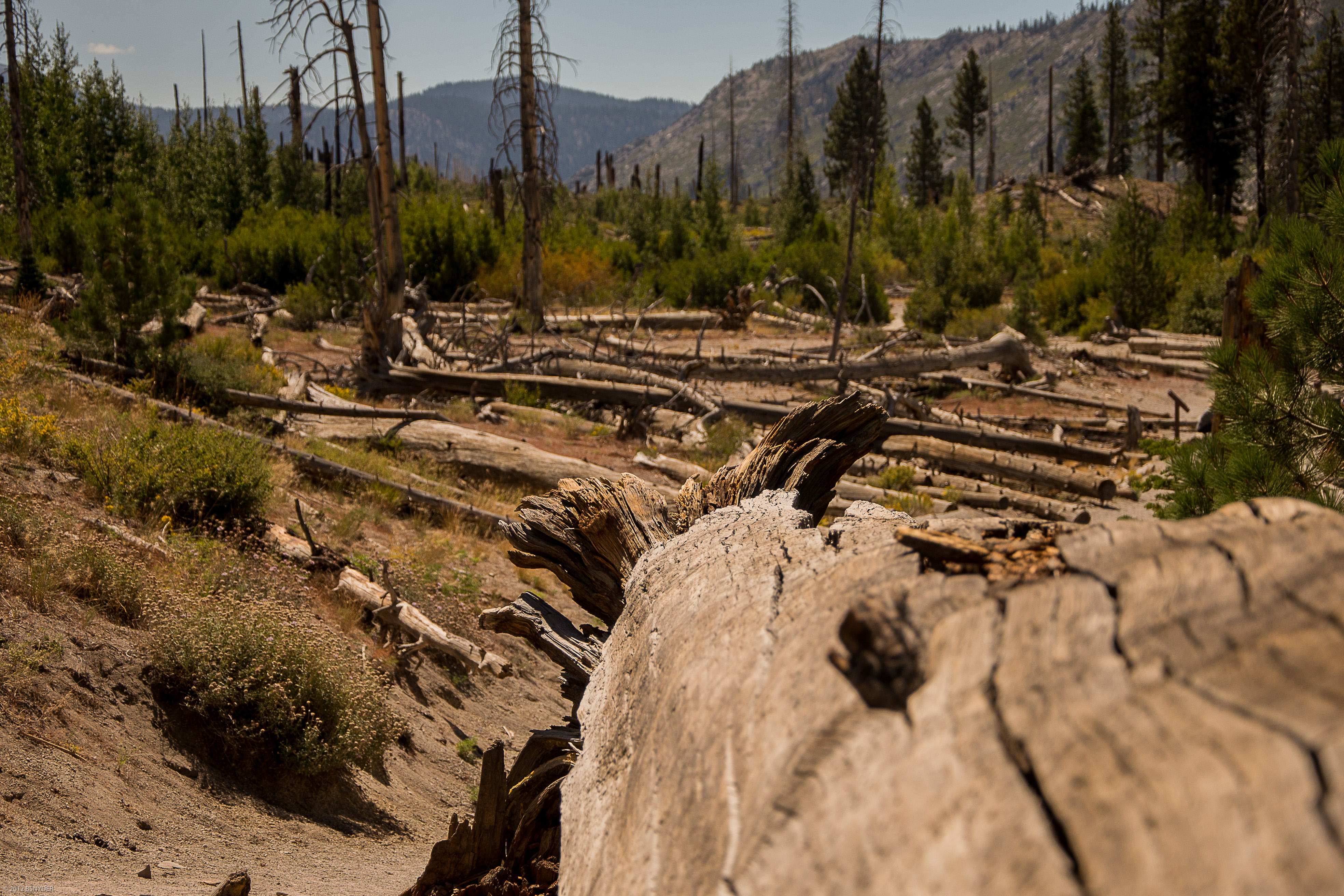
Remnants of the Rainbow Fire in 1992 that were felled during the Nov. 2011 100 mph windstorm.
As I was standing looking at the open expanse, I happened to be behind two behemoths that were fire damaged on the bottom, but alive on top. As the wind was blowing pretty hard, I didn’t linger behind the trees – just got a scary feeling of danger. As it turns out, I witnessed (by ear) the felling of a huge tree. I had just left the lower fork of the Rainbow Trail after chatting with four ladies who were college roommates way back when, and took the Pacific Crest Trail south to get to where I needed to be. Anyone who has hiked the Pacific Crest (or the Appalachian for that matter) knows it’s not just a stroll in the woods on smooth trails. You have to work at it pretty hard in places. I had just gotten over a a fairly steep ridge and my knees were telling me WHOA!, when I heard a massive crash and felt the vibrations from the thump in my feet. I debated going back to see whether the ladies were OK, but figured I was close enough to hear if they needed help and I couldn’t face going up that ridge again. I reported the tree to the rangers at the parking area and they assured me there were lumberjacks in the area working on the 2011 clean-up. HOWEVER, I met another group of people at the Postpile, who later confirmed that no indeed, the tree was over the trail, no one was around it and the trail had not been blocked off as the ranger said. They saw the tree starting to fall, it lost a big branch and the tree cracked and swayed, but then nothing more happened, so they went on to the falls and when they came back, it had fallen.

The Devil’s Postpile – I cannot find who named it – was breathtakingly beautiful. The geometric shapes and curvy lines formed thousands of years ago were probably the first abstract art! The person(s) who discovered these formations would have had a hard time describing them without photos.

Glaciers flowed down the San Joaquin valley after the lava had hardened, scraping one side of the balsalt columns clean, and leaving striations across the top.
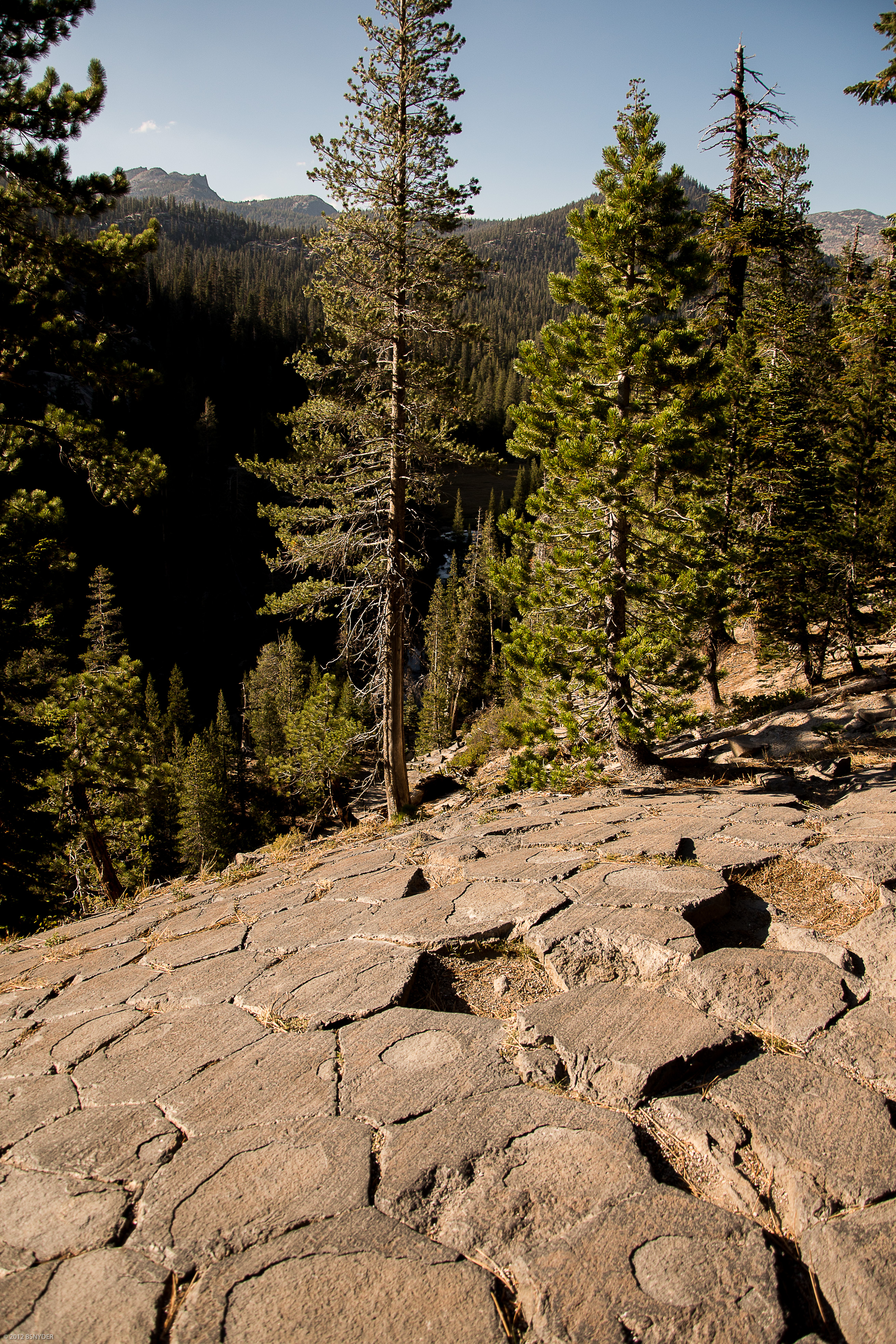


Self Portrait from the top.
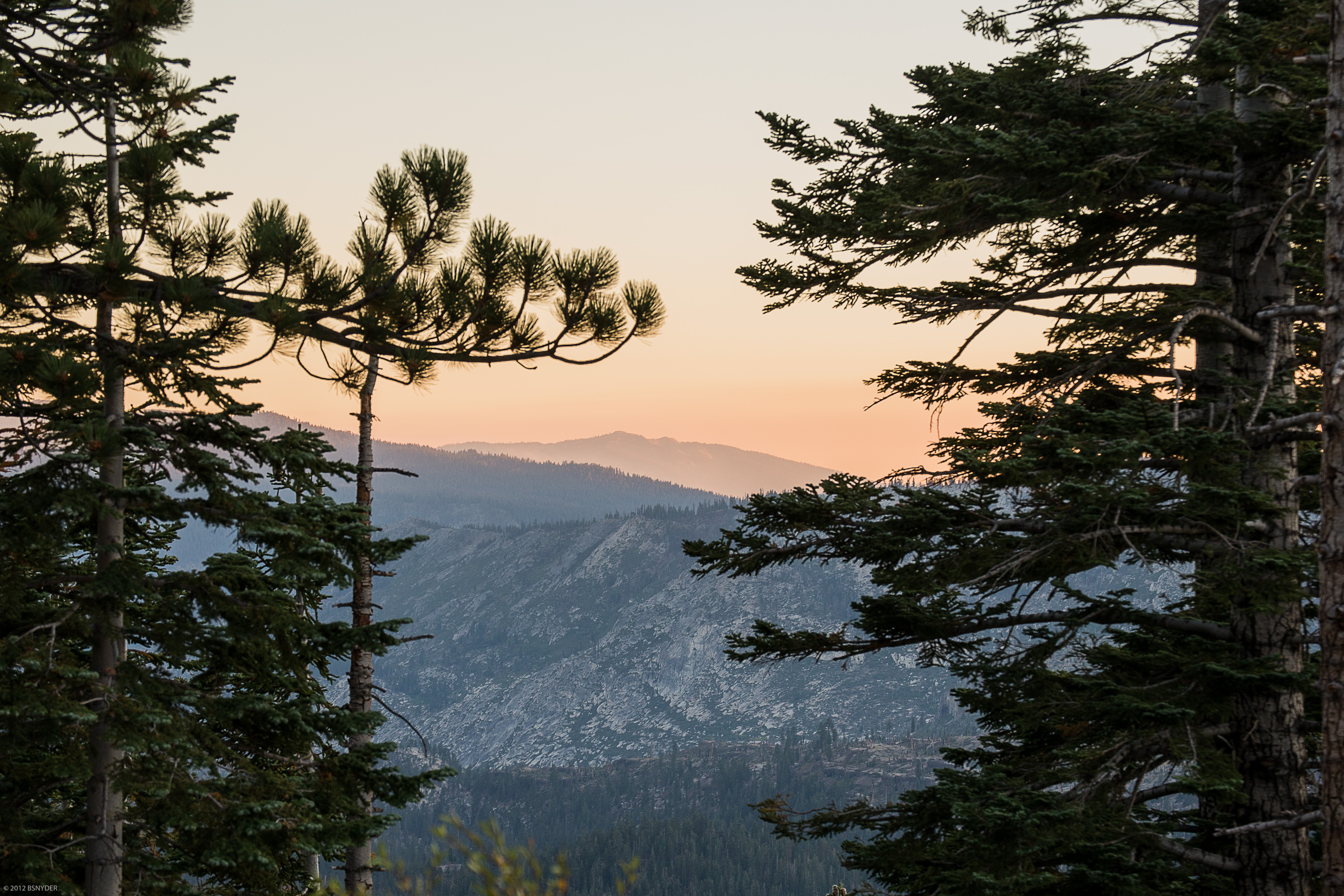
After leaving the Postpile (I had to drag myself away from the beauty because the sun was setting), I took a couple more photos on the way out.


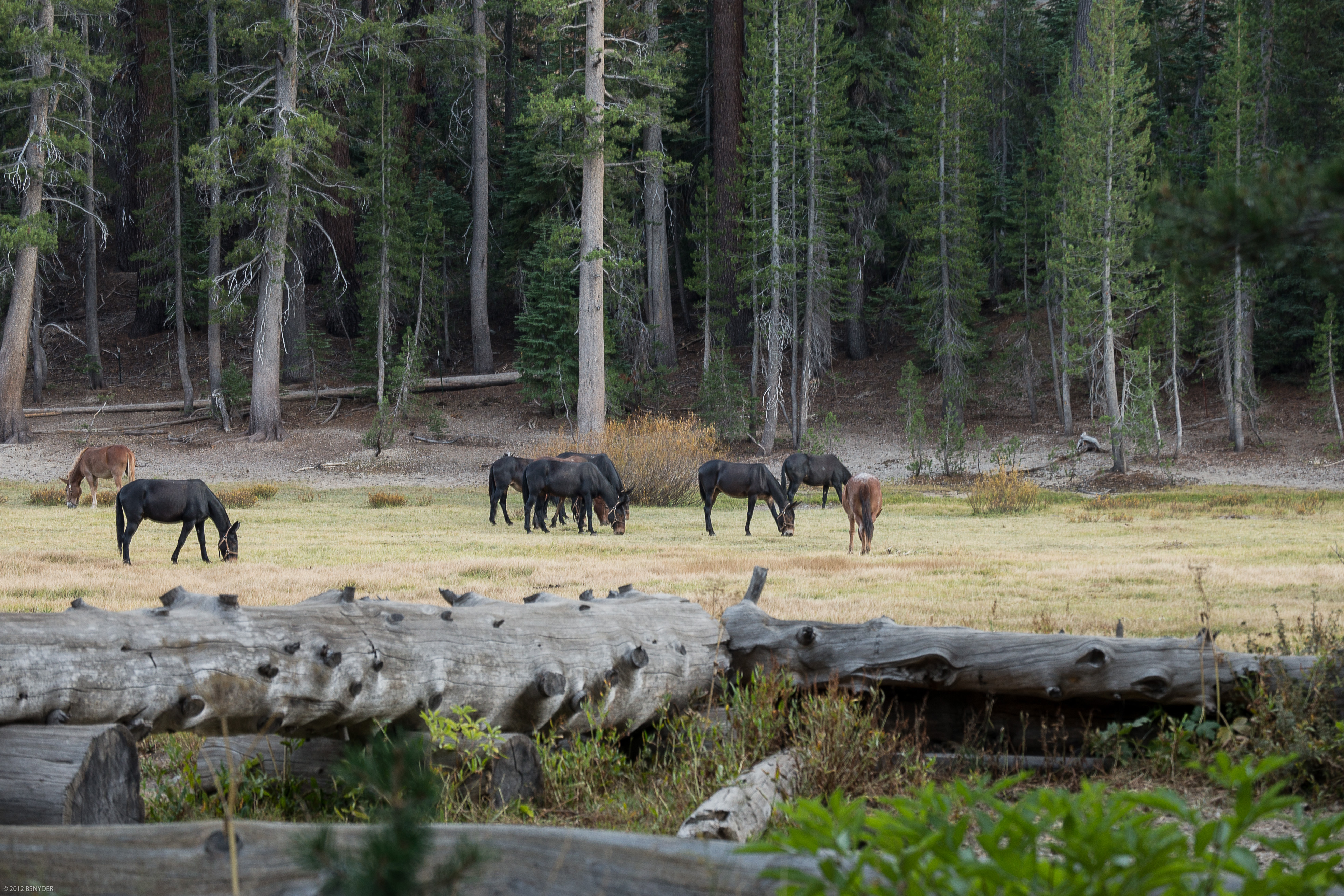
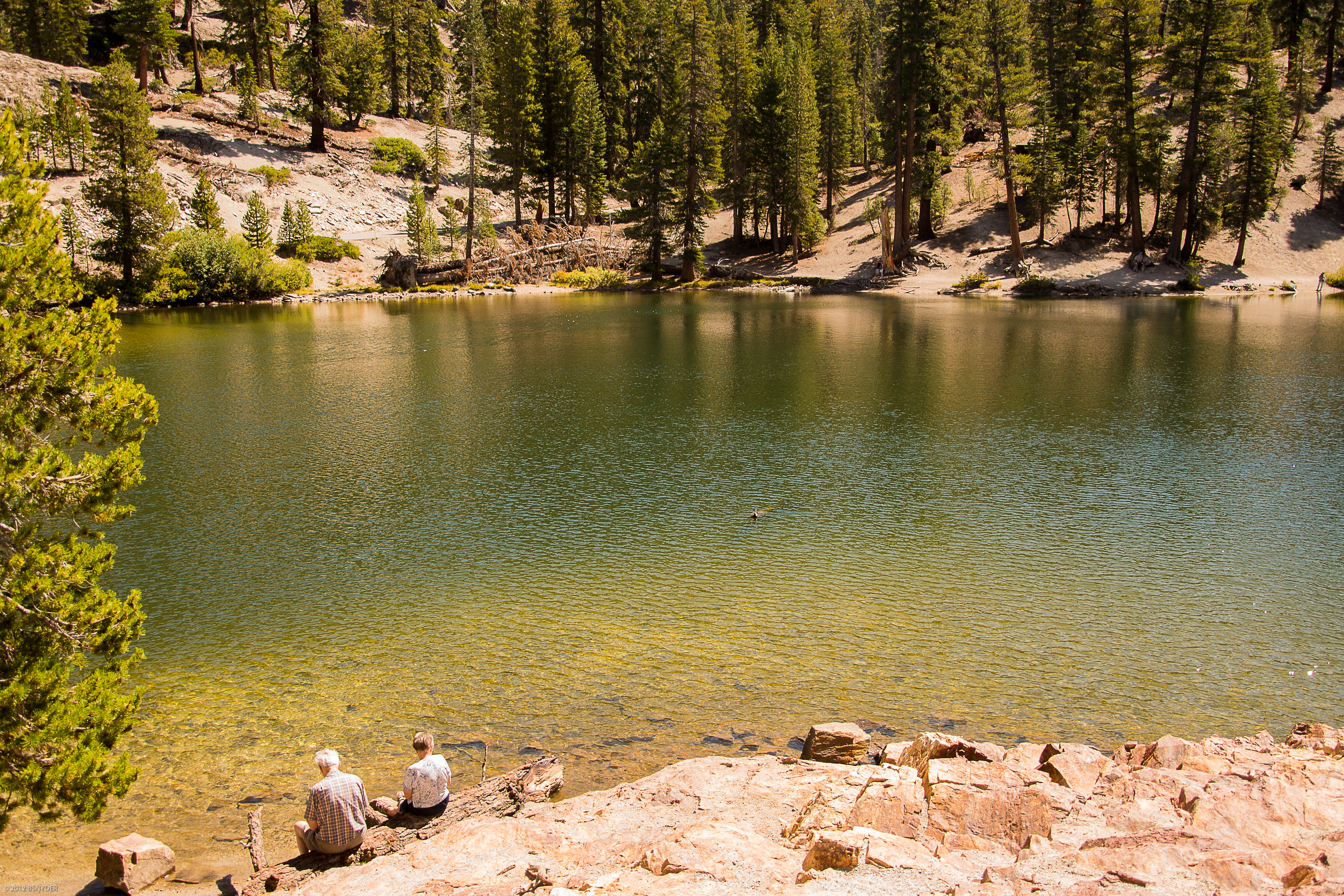
Both Shearwater Lake and Sotcher Lake were carved by glaciers. They will eventually fill with debris and become open meadows.



 from egghill
Leave a comment